Black Friday email marketing strategy: 8 CRM priorities for peak
How to prepare your CRM for higher send volumes, stronger conversion and better retention across Black Friday and the wider peak period.

Black Friday gets the headlines, but for ecommerce teams it is only one part of a much longer peak trading period.
Cyber Monday follows almost immediately. Then attention shifts to Christmas gifting, delivery deadlines and Boxing Day, before January sales and gift-card redemption create another wave of activity.
In 2025, around 23% of UK online retail spending took place during November and December, accounting for £26.9 billion of online spend across the two months.*
For CRM teams, that changes the planning challenge.
A strong Black Friday email marketing strategy is not simply a plan to send more campaigns over one busy weekend. It needs to help you convert increased demand throughout peak while protecting margin, maintaining deliverability and creating opportunities for future sales.
That takes more than a busy campaign calendar. It means getting the foundations right before trading pressure starts to build.
The 8 things to get right before peak
A strong Black Friday CRM strategy should cover:
Get the peak plan agreed
Learn from previous peak periods
Plan the sending ramp and protect deliverability
Keep automated emails current
Cleanse the base without losing opportunity
Stress-test segments and automations
QA the whole buying journey
Respond during peak and retain customers beyond it
These are not eight separate jobs.
Each one informs the next. Your commercial plan determines what CRM needs to deliver. Previous customer behaviour helps you decide where to focus. That shapes your audiences, sending volumes and journeys. From there, testing and QA make sure the experience holds together before activity goes live.
Here is how to approach each stage.
1. Get the peak plan agreed
Start with what the business needs from peak, rather than how many emails the CRM team intends to send.
Agree revenue targets, margin expectations and priority products across the full trading period. Be clear about the contribution CRM is expected to make and how that fits into the wider commercial plan.
Once those priorities are clear, work backwards.
Map campaign dates, build deadlines, approvals, testing periods and dependencies before peak activity begins. Give your team enough time to act on anything testing uncovers, rather than leaving QA as the final task before launch.
Ownership matters too.
Everyone should know who is responsible for delivery, who is monitoring performance and who can make changes when stock, offers or results shift. Holiday cover should be clear, as should the person with the authority to pause activity if something goes wrong.
The goal is to enter peak ready to respond, not still trying to finish the plan.
And once that plan is clear, your previous peak data becomes much more useful. Instead of reviewing performance in isolation, you can use it to decide where this year's effort should go.
2. Learn from previous peak periods
Last year's biggest revenue day tells you what happened. It does not automatically tell you what to repeat.
To make previous performance useful, look beyond the headline numbers and into the customer behaviour behind them.
Start with who responded.
Compare clicks across audiences, messages and different stages of peak. Look at what happened as email frequency increased. Which customers stayed engaged? Which groups became less responsive? Where did complaints or unsubscribes begin to rise?
Then look at what converted.
Compare conversion and revenue per recipient alongside average order value, margin and repeat purchase. Separate new customers, existing customers and higher-value customers rather than treating every order as commercially equivalent.
Finally, look for the signals you did not act on.
Repeated clicks, category interest, abandoned baskets and seasonal purchasing patterns can all indicate intent. Check whether those behaviours led to relevant follow-up or simply disappeared into campaign reporting.
This is where turning customer signals into targeting decisions becomes valuable. The aim is not to produce a retrospective full of charts. It is to decide what you should repeat, change or test this year.
Those decisions should then shape how you build towards peak, particularly when sending volumes begin to rise.
3. Plan the sending ramp and keep promotions fresh
Peak usually means sending more email, but increasing volume too quickly can put Black Friday email deliverability at risk.
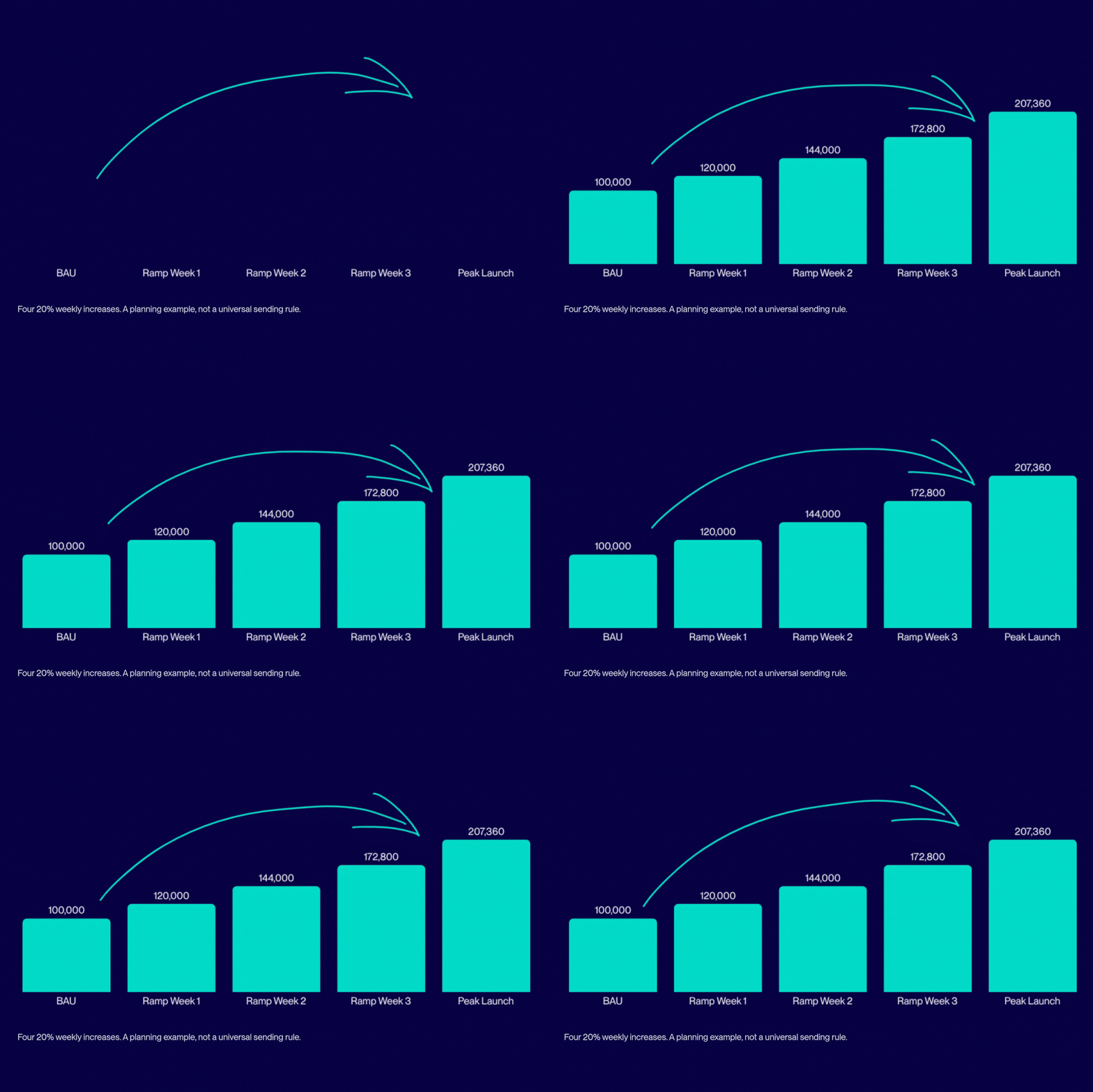
Compare your normal sending volume with your busiest planned week and work backwards from the gap. The larger the increase, the more carefully you need to think about how you build towards it.
The graph below shows a simple example of how that ramp might look in practice. It uses four successive 20% increases to illustrate the journey from business-as-usual sending to a much higher peak-week volume. It is a planning example, not a fixed rule, but it helps show why ramping volume needs to be deliberate rather than sudden.
Start with relevant, engaged audiences and monitor complaints, bounces, deferrals, delivery issues, domain reputation and customer response as volume increases.
If performance starts to deteriorate, adjust the plan rather than pushing ahead simply because another campaign is scheduled. Your sending strategy and deliverability strategy should work together.
More volume also means giving customers more reasons to engage.
Rather than repeating the same discount, vary the offer, audience and reason to buy. That could mean early access for loyal customers, threshold offers to support order value, free delivery, gifts with purchase or product-led messaging based on customer interest, stock and margin.
As peak progresses, the story should move with it — from early access and Black Friday offers into gifting, delivery deadlines and January sales.
The principle is simple: more reasons to buy, not simply more reminders.
And while your campaign activity changes throughout peak, your automated journeys will keep running alongside it.
4. Keep automated emails current
Your campaign calendar may change dramatically during peak, but your automated journeys do not stop.
Customers will still enter welcome programmes, abandon baskets, browse products, reach replenishment points and interact with loyalty journeys.
Those messages need to make sense alongside your live peak activity.
Start with the customer action, not the channel. A basket email should still help someone return to their basket. A welcome journey should still introduce the brand properly. Seasonal messaging should support the purpose of the journey rather than taking it over.
One practical option is to use a centrally controlled content block that brings relevant Black Friday, Cyber Monday, Christmas delivery or January sale messaging into selected automated emails.
That gives you greater control without rebuilding every journey from scratch.
Be clear about where seasonal content appears, when each version starts and ends, and what should happen when an offer expires or a delivery deadline passes.
Then test the actual experience.
Check customer, country and product rules. Make sure expired content cannot remain live. Review how promotional messaging interacts with service communications too, as adding marketing content may affect how those messages need to be treated from a direct marketing perspective.
Keeping journeys relevant is important, but those journeys are only as reliable as the customer data behind them.
That makes database quality the next priority.
5. Cleanse the base
Cleaning your database before peak is sensible.
Removing everyone who does not behave like your most engaged audience is not.
The objective is to reduce sending risk without removing genuine commercial opportunity.
Start with poor-quality data.
Exclude invalid addresses and hard bounces. Investigate repeated soft bounces rather than allowing them to accumulate. Be particularly cautious about bringing long-inactive contacts with no purchase history into a sudden increase in sending volume.
Quieter customers need a more considered approach.
Someone who engages less frequently throughout the year may still have a strong seasonal buying pattern. Review purchase history, seasonality and recent browsing alongside email engagement.
The important distinction is between customers who are genuinely inactive and those who simply buy differently.
A valuable Christmas customer should not automatically disappear from your peak plan because they did not click an email in June.
For less engaged groups, a better approach may be to reduce frequency and concentrate activity around the products, categories and buying periods most relevant to them.
In other words, clean the risk, not the opportunity.
Once you know who should be contactable during peak, the next question is whether your CRM programme behaves properly when all of those audiences, offers and journeys start interacting.
6. Stress-test segments and automations
Testing journeys one by one will only get you so far.
Peak puts multiple parts of your CRM programme under pressure at the same time, so you need to understand what happens when those journeys overlap.
A customer might be midway through a welcome offer when your Black Friday promotion launches. Which offer takes priority? Can they stack? What protects margin?
An automated incentive might suddenly be weaker than the live promotional offer. Should it still be sent?
A VIP with early access might also qualify for the main campaign audience. Are your exclusions working?
A Christmas delivery deadline might change while seasonal content is still appearing across several automations. Which messages need to update immediately?
Heavy campaign activity can also overlap with high-intent journeys such as basket or browse abandonment. If frequency rules suppress the triggered message in favour of another campaign, you may end up blocking the communication most likely to help the customer convert.
Individually, each automation can look perfectly healthy.
The problems often appear when customers qualify for several things at once.
So test the combined customer experience, not simply the output of each individual journey.
That exercise will uncover many of the CRM conflicts that could affect peak. The next step is to make sure the experience still works once the customer leaves the inbox.
7. QA the whole buying journey
QA should go beyond checking that the email renders correctly. You need to test the journey from the customer's point of view, from opening the message through to completing a purchase.
Start with the email itself. Check rendering across your priority devices and email clients, along with personalisation, dynamic content, fallback states, links, pricing, offer wording and expiry dates.
From there, follow every route through to the website. Make sure landing pages reflect the offer in the email, products are available at the expected price and basket links, delivery messaging and location rules work as intended.
Checkout deserves the same attention. Test promotional codes, thresholds, exclusions, offer stacking, free gifts, delivery charges and fulfilment options so there are no surprises at the point of purchase.
Finally, check the reporting. Confirm that campaign tracking, attribution, orders, revenue and currency are being recorded correctly, and look out for conversion events that are missing, delayed or duplicated.
The important thing is to test the experience as a customer would, rather than treating the email as an isolated piece of activity. If something breaks between the inbox and the completed order, it can quickly undermine the work that went into the campaign.
And once peak is underway, that same mindset should continue. Stock, customer behaviour and trading performance will change, so your CRM activity needs to be able to respond with them.
8. Respond during peak and retain beyond it
Once peak begins, your plan should guide decisions rather than restrict them.
Monitor performance and respond to what customers are actually doing.
Review clicks, conversion, revenue per recipient and margin against your original expectations. Keep watching complaints and delivery performance as frequency increases.
If clicks are strong but sales are weak, do not assume the answer is another campaign.
Investigate first.
The problem might sit with the landing page, product availability, the offer, checkout or another part of the buying journey.
Adjust audiences, frequency, featured products and offers as customer response and stock levels change. The preparation you have already done should make those decisions faster and more informed.
Then think beyond the first order.
Separate first-time, repeat, seasonal and reactivated buyers and consider what each group should receive next.
Purchase data can help you shape follow-up, but context matters. Gifting is the obvious example. Someone buying a product as a Christmas present has not necessarily told you that the category reflects their own interests.
Depending on the customer and purchase, useful follow-up might include product advice, complementary purchases, replenishment or a carefully timed next offer.
And when you measure the impact of peak, look beyond immediate revenue.
Repeat purchase, returns and margin all help show whether new peak customers are becoming valuable customers rather than simply one-off orders.
That is where peak season email marketing becomes more than a promotional exercise. Done well, it gives you both short-term sales and better customer relationships to build on afterwards.
Peak is much more than just Black Friday.
The strongest Black Friday email marketing strategies are not built around sending the maximum number of campaigns in the shortest possible time.
They are built around preparation and joined-up decision-making.
Start with the commercial plan. Use previous customer behaviour to decide where to focus. Build sending volume carefully and protect deliverability. Give customers fresh reasons to buy. Keep automated journeys relevant, protect database quality and stress-test how your programme behaves under pressure.
Then QA the complete buying journey and stay ready to respond when real customer behaviour starts challenging the plan.
Most importantly, do not treat the Black Friday order as the end of the story.
The opportunity continues through Christmas, January and into the customer relationships you build after peak.
Final thoughts
If your team needs support getting CRM ready for peak — from campaign planning and deliverability to segmentation, automation and journey QA — get in touch with the Jarrang team. We can help you identify the gaps, prioritise the areas that will make the biggest difference and get your CRM programme ready before peak activity begins.
Source: Adobe Digital Insights.
Subscribe to our insights newsletter
Be the first to know what's trending in email and CRM.
Share this story
Related insights

Article 5 min read
CRM Strategy Beyond Campaigns: How to Build a Repeatable Lifecycle System
Read post
Article 5 min read
Lifecycle Marketing Strategy: Start With the Customer Action, Not the Channel
Read post
Article 5 min read